In the macroeconomic landscape of high-performance metallurgy, natural anodizing (also referred to as clear anodizing or Type II/III sulfuric acid anodization) stands as a foundational technology. The electrochemical conversion process generates an integrated aluminum oxide layer that is chemically bonded to the base substrate, preventing the common risks of flaking, peeling, or corrosion that plague standard organic coatings.
With the global emphasis shifting toward circular economies and environmental regulations like RoHS and REACH, natural anodized finishes present a clear competitive advantage. Uncolored, non-hazardous, and fully recyclable, natural anodized components deliver high emissivity, robust UV stability, and enhanced thermal dissipation. OEMs in the aerospace, automotive, infrastructure, and electronic sensor industries rely on this finish to balance structural performance with modern compliance metrics.
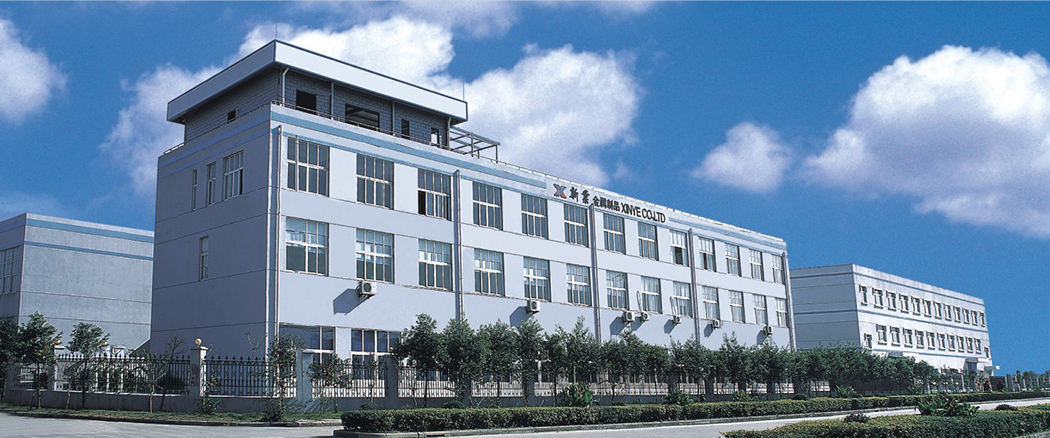
Founded in 1996 as a family-owned metal workshop, Ningbo Jiangbei XinYe Metal Works Co., Ltd. has developed into a leading owner-managed SME corporation. Located in the Ningbo Jiangbei Industrial Zone, our facility is situated within a 3-hour journey of the Shanghai international airport network by high-speed train, granting us unmatched access to global supply chains and logistics ports.
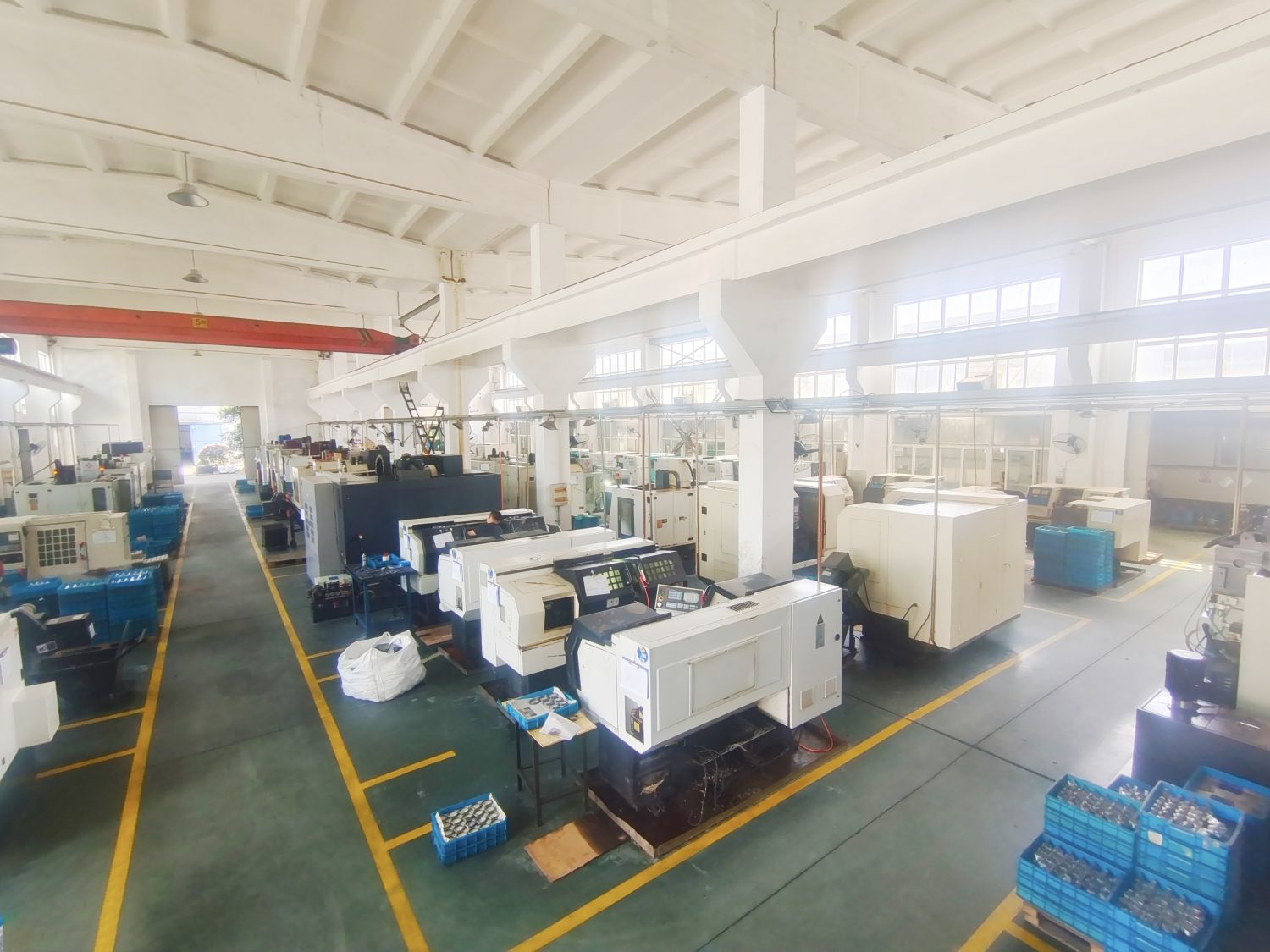
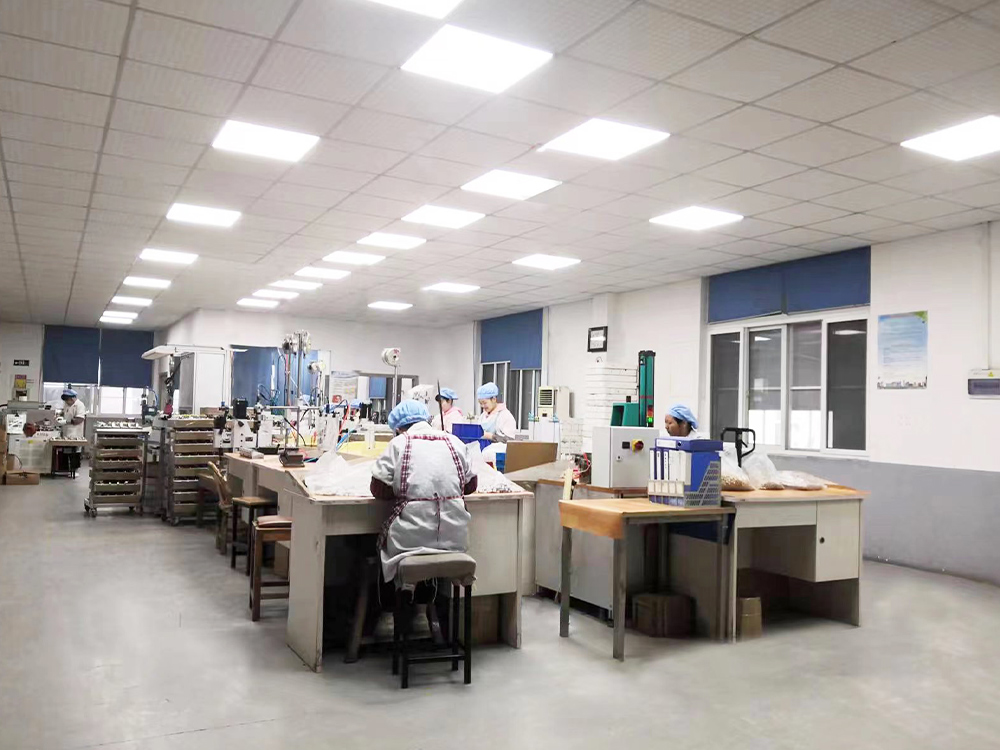
Spanning a modern 16,000 square meters of production floor, complemented by an additional 11,000 square meters under construction, XinYe is a hub of technological competence. We manage a total team of 130 dedicated personnel. This includes 80 high-skilled operators on the production line, and a highly specialized group of 50 professionals in engineering, product development, global supply chain, management, and strict quality control.
At Ningbo Jiangbei XinYe Metal Works Co., Ltd., our engineering competencies have evolved alongside our customers' technological needs. Beyond conventional metal forming processes, we offer a comprehensive one-stop solutions portfolio including design optimization, product development, structural engineering, sample validation, and global supply chain logistics.
Our primary technological capabilities are delivered by highly trained engineers, ensuring we meet strict tolerances for demanding global markets. We supply high-precision components to customers located across Europe, North America, and Russia operating in medical, automotive, food processing, and specialized safety instrumentation sectors.
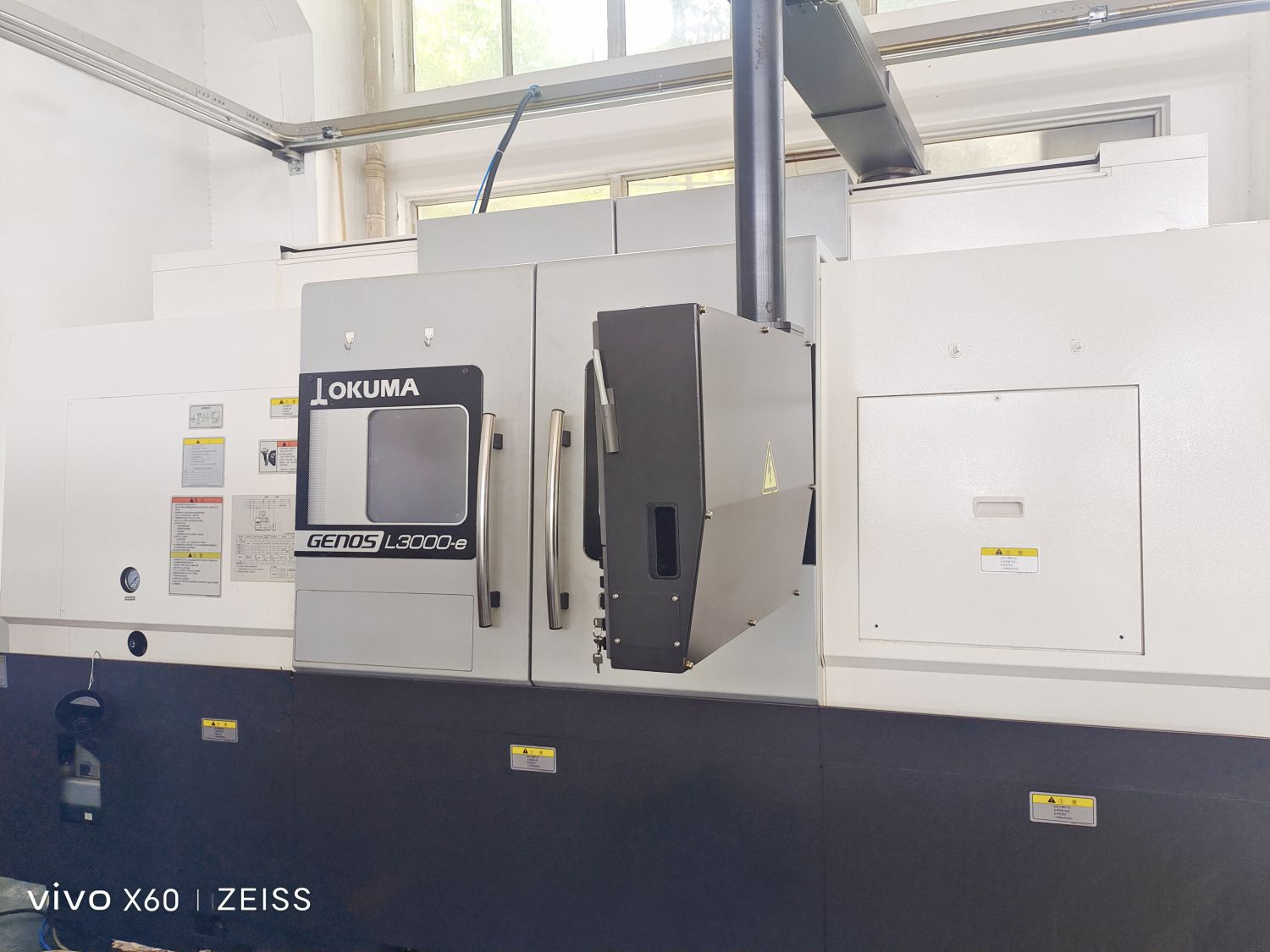
Our engineering and manufacturing capabilities are backed by advanced production machinery, primarily imported from Japan, which enables us to maintain exceptional accuracy for high-volume orders.
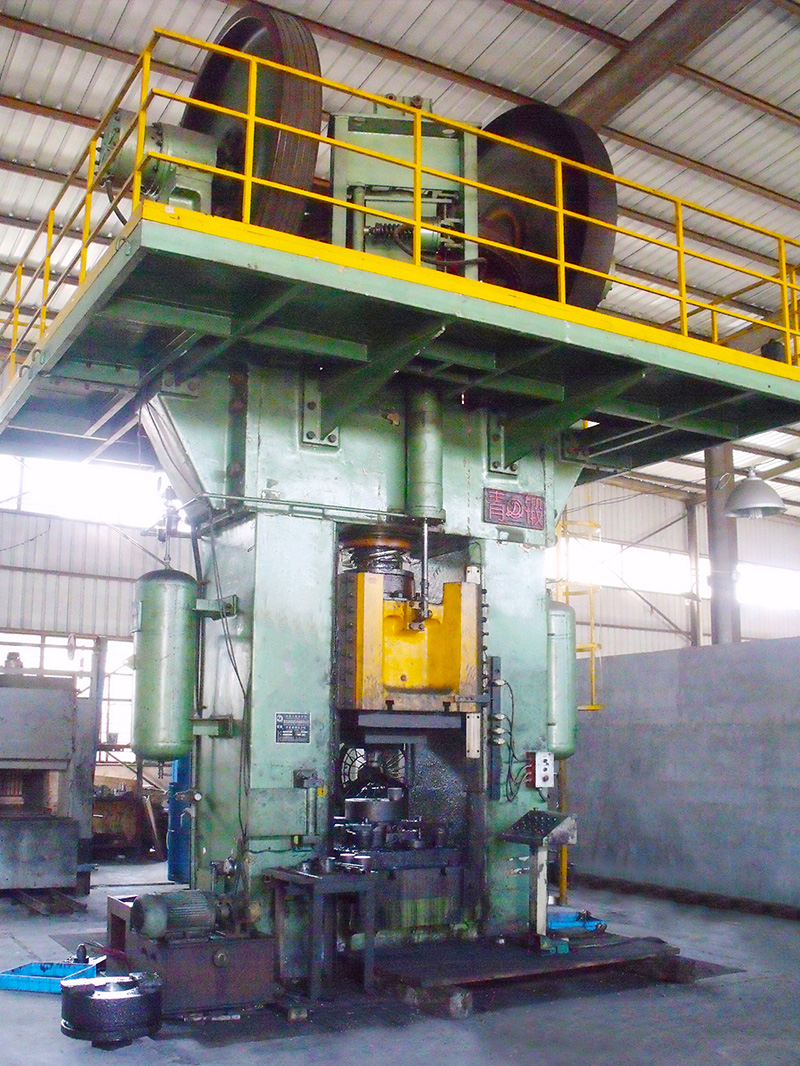
High-capacity friction press machinery featuring press force parameters ranging from 300 tons up to 1000 tons. This configuration yields optimal metal grain flow lines for premium load-bearing components.
Equipped with high-precision column hydraulic machinery delivering press forces from 100 tons to 630 tons, allowing for deep drawing and stamping operations with minimal component distortion.
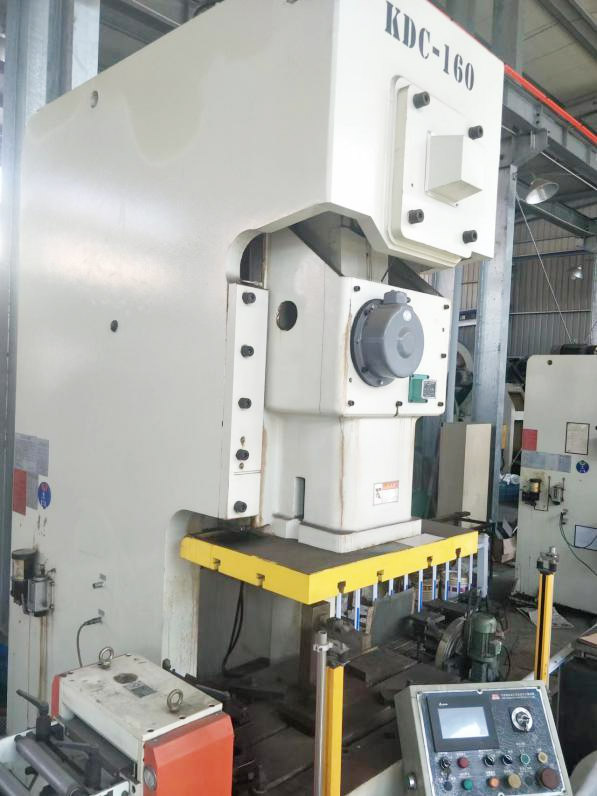
A fleet of punching press units ranging from 5 tons to 250 tons, providing versatile forming capabilities for light-gauge alloys, structural steel, and conductive copper sheets.
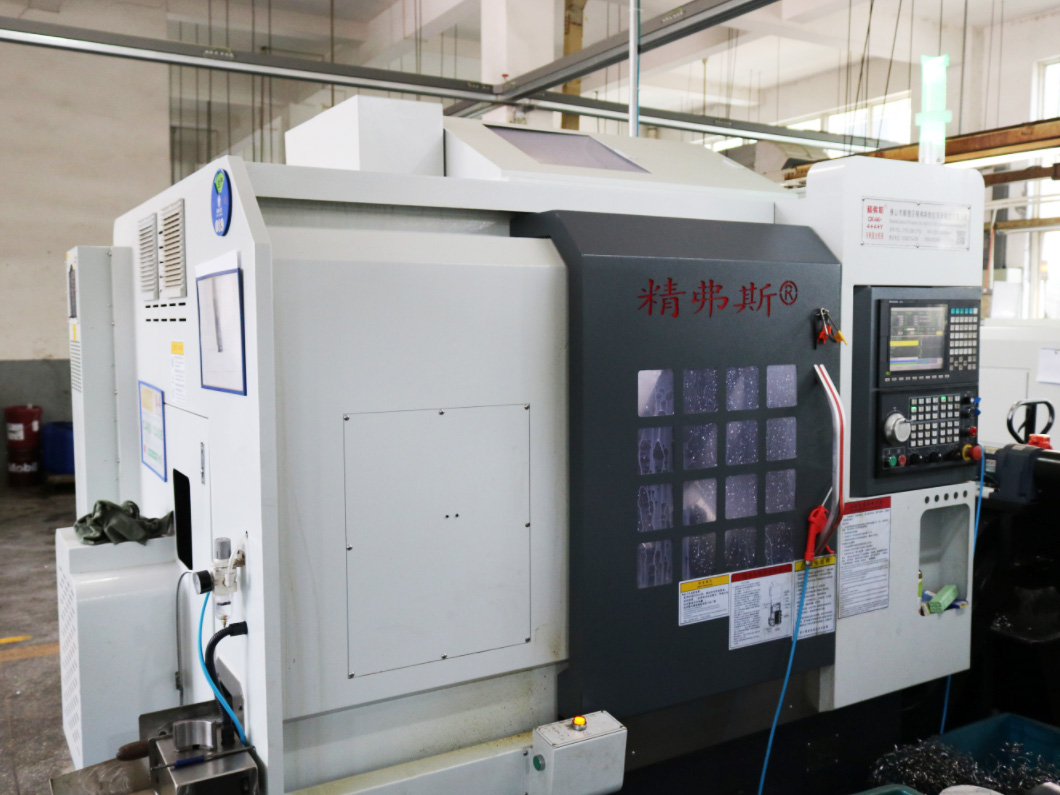
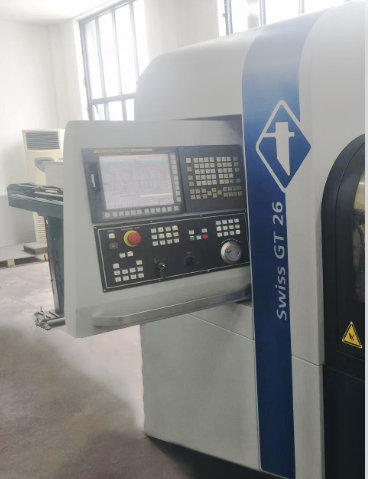
Imported high-speed CNC multi-axis centers delivering up to 4-axis simultaneous path control to machine complex geometry without requiring multiple setups.
Dedicated CNC lathe turning and vertical/horizontal milling centers configured for consistent volumetric output and rapid changeovers.
Operating at 16 hours a day, 6 days a week. With our modular workforce scaling strategy, we can transition to a continuous 24/7 operational cycle within 30 days of client notification.
The performance of a natural anodized finish depends on precise chemistry management within the anodizing bath. By controlling parameters like sulfuric acid concentration ($H_2SO_4$ at 180-200 g/L), solution temperature ($18-21^\circ\text{C}$), and current densities ($1.0-1.5\text{ A/dm}^2$), we grow a uniform aluminum oxide layer ($Al_2O_3$) directly out of the base alloy.
For parts exposed to marine or demanding industrial environments, we utilize hot water hydration or nickel acetate sealing. This process converts the porous amorphous oxide structure into boehmite ($AlO(OH)$), sealing the pores to prevent atmospheric corrosion. Our future technological roadmap includes testing trivalent chromium conversion pre-treatments and organic acid additives to further reduce energy usage while maintaining excellent optical clarity.
At Ningbo Jiangbei XinYe Metal Works, quality is built into each stage of our production process. Our QA program is backed by ISO 9001-2015 and SA8000 certifications, providing complete traceability from raw materials to final shipping.
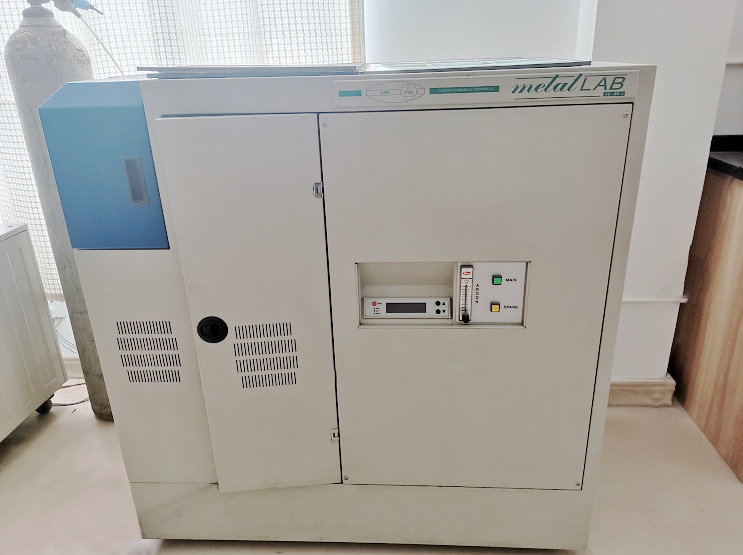
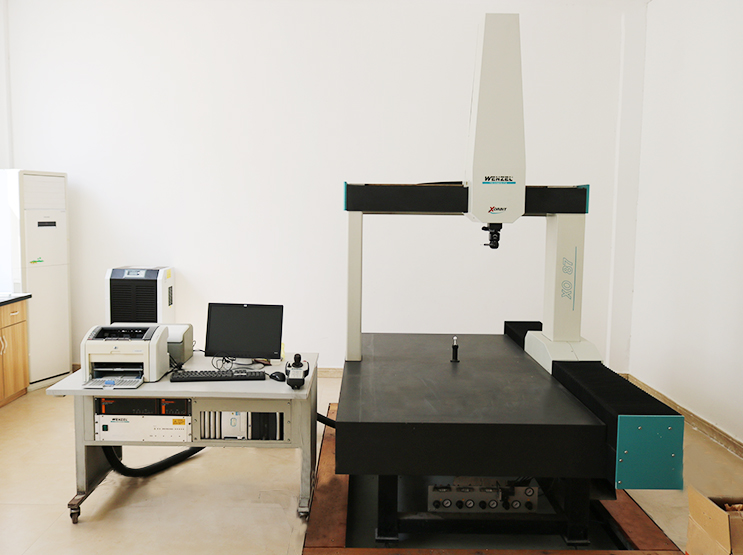
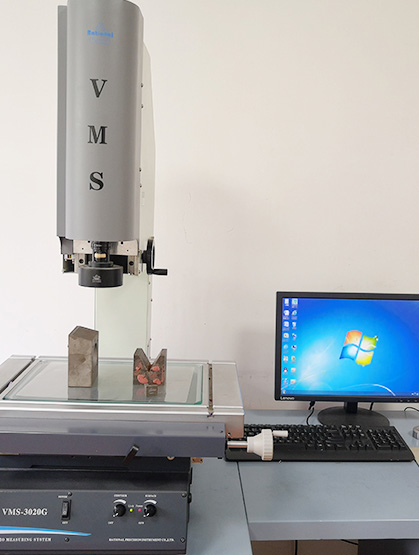
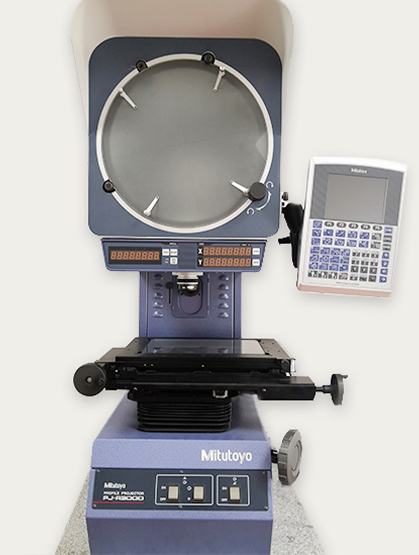
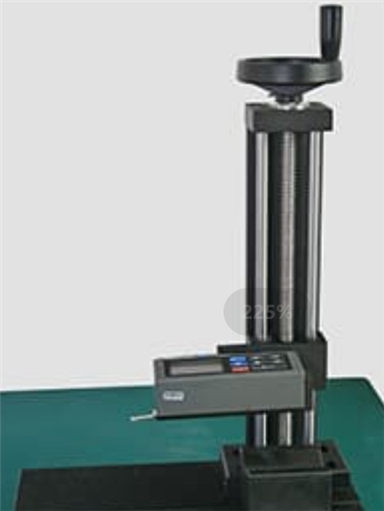
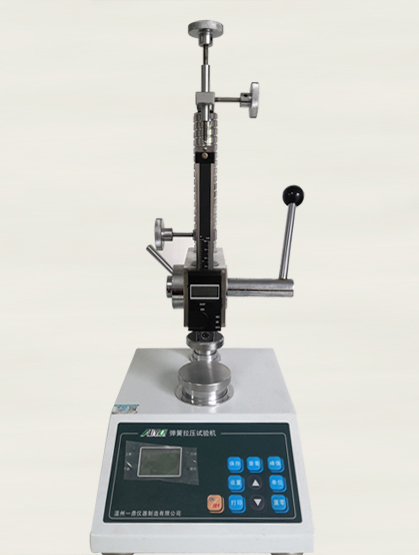
From initial design consultation to final delivery, our processes are structured to ensure quality and technical compliance at every step.

We confirm all 2D/3D technical drawings, key tolerances, finish requirements, and targeted lead times.

We purchase raw materials, manufacture initial samples, and provide a full dimensional report with material certification.

We wait for formal approval from your quality control team before starting volume manufacturing.

We transition to mass production, setting up intermediate inspection checkpoints throughout the manufacturing line.

We provide a one-year warranty against manufacturing defects and supply full logistical documentation.



To meet the quality and labor standards of international OEMs, Ningbo Jiangbei XinYe Metal Works holds both ISO 9001-2015 and SA8000 certifications. These registrations demonstrate our commitment to systematic quality control, environmental safety, and ethical workplace practices.
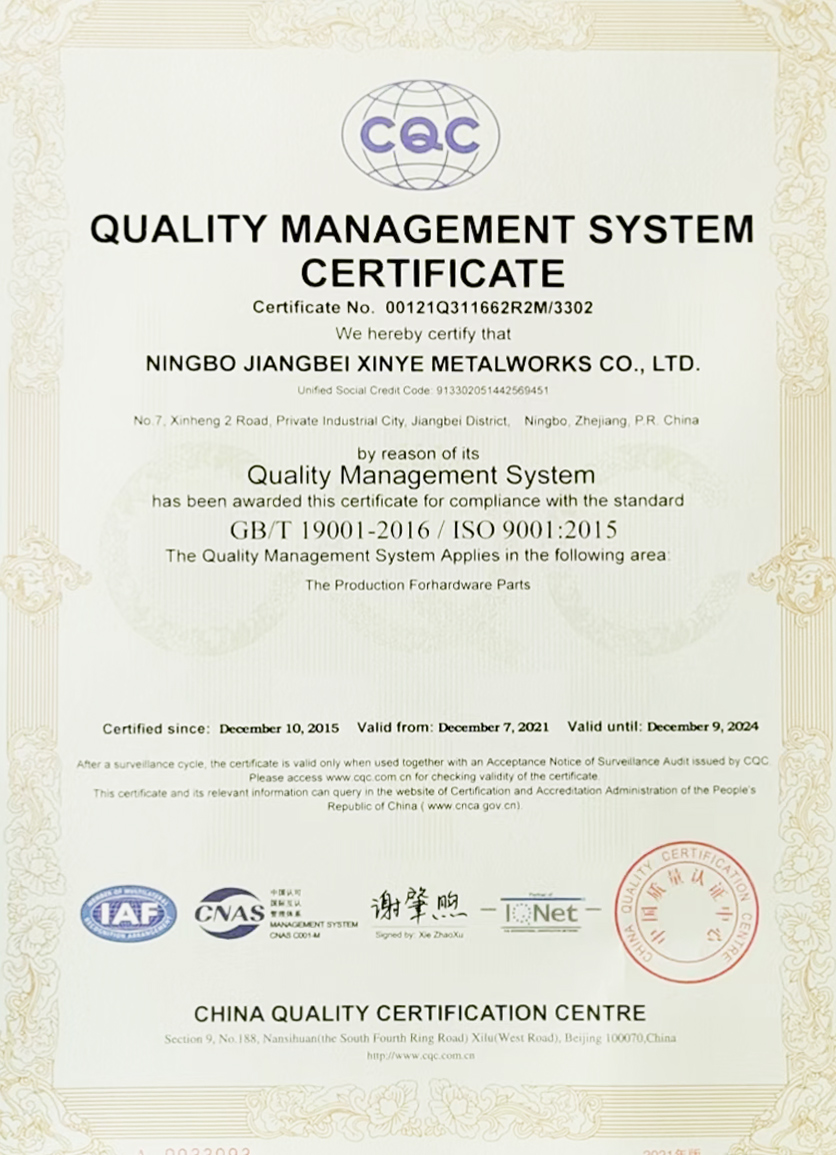
ISO 9001:2015 Certified
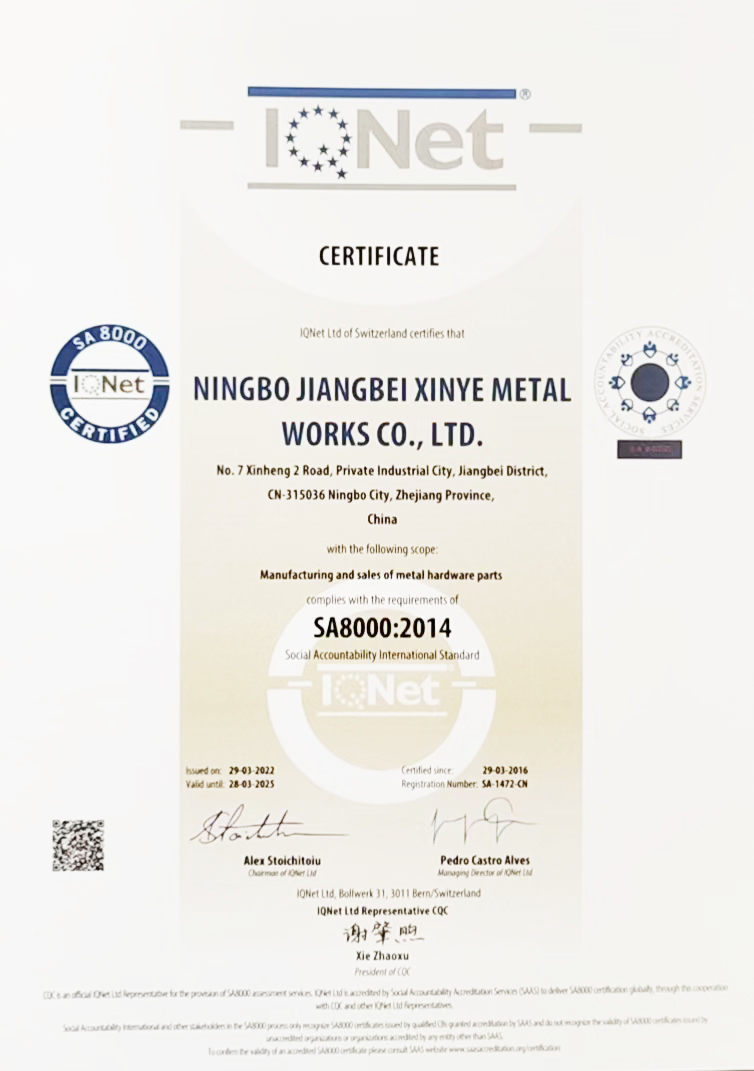
SA8000 Social Accountability
Trust: We prioritize meeting and exceeding client specifications on every order, ensuring a reliable partnership.
Responsibility: We manage all processes with care, providing customized engineering solutions that support our clients' business goals.
Professionalism: We maintain a focus on continuous improvement in both our manufacturing technologies and quality systems.
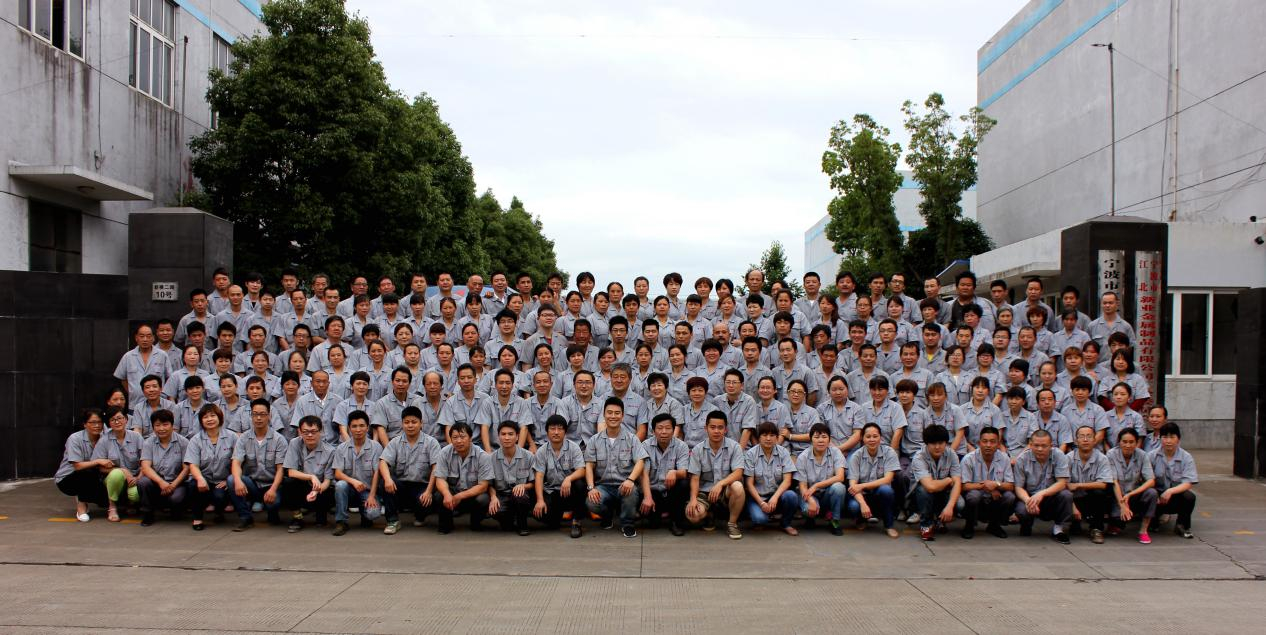
A video tour of our metal fabrication plant in Ningbo, showing our stamping operations, tool making, metal forging lines, and quality control center.
Watch our high-precision Japanese turning and milling center process custom metal components within micron-level tolerances.
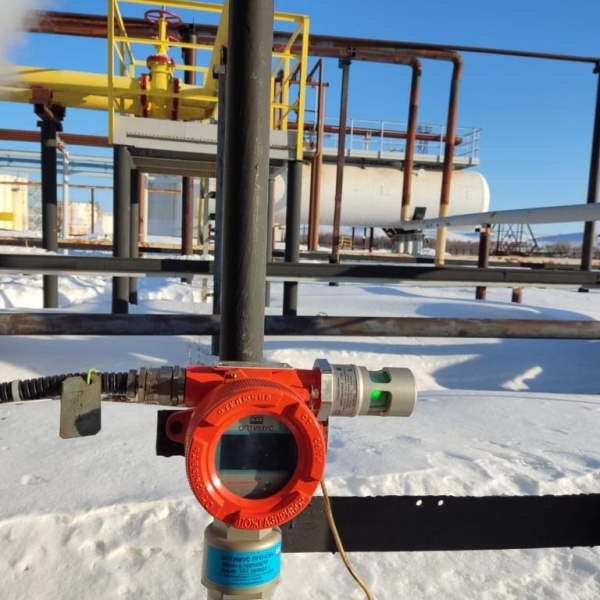
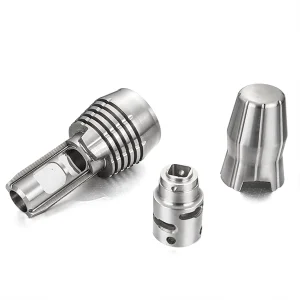
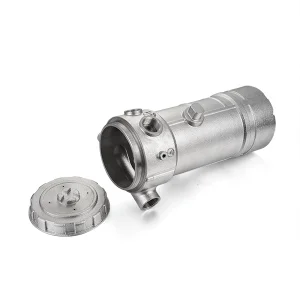
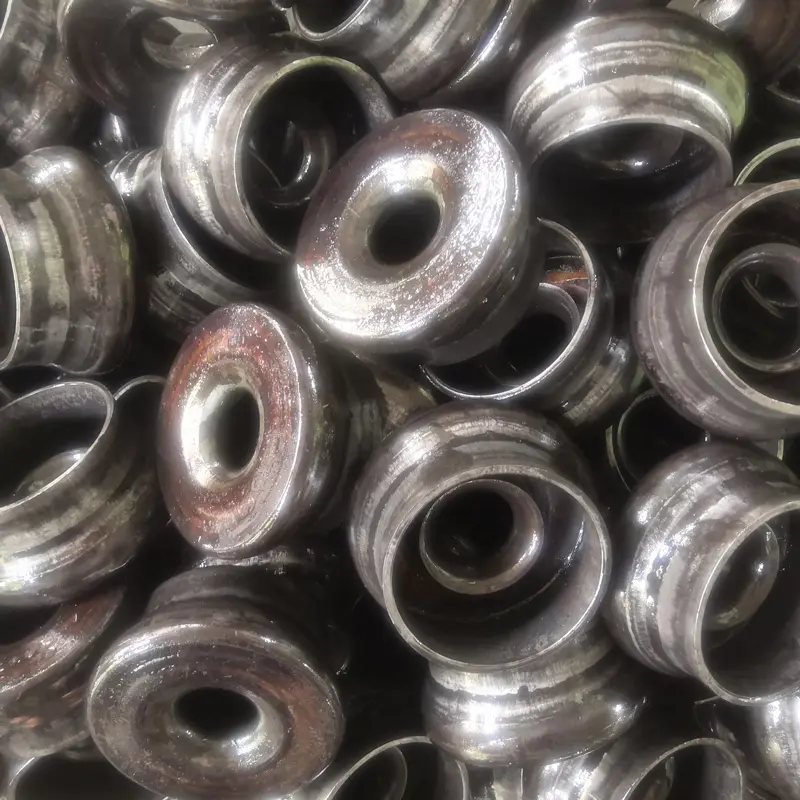
Precision forged components for high-stress applications, utilizing 6000-series structural alloys with a natural anodized finish to prevent oxidation.

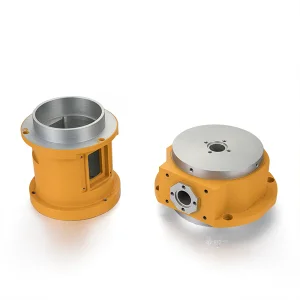
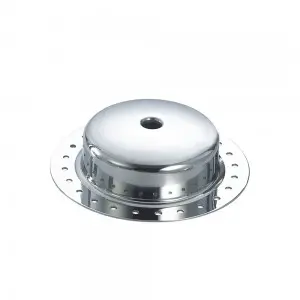
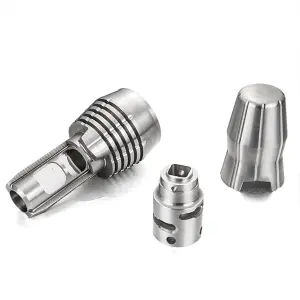
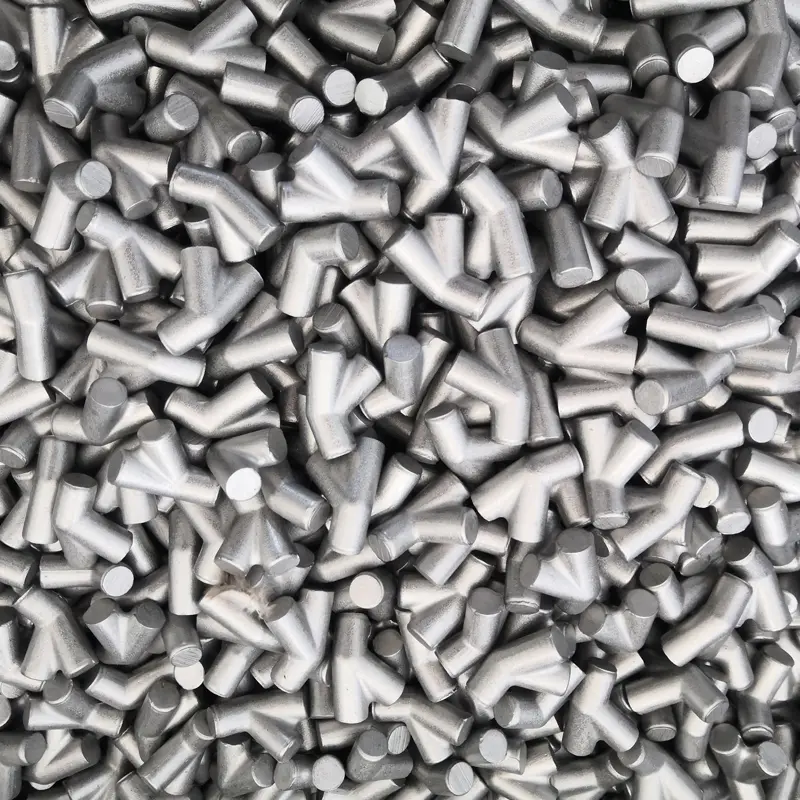
Tight-tolerance transmission components and lightweight electric bike connectors, built to withstand continuous vibration and wear.
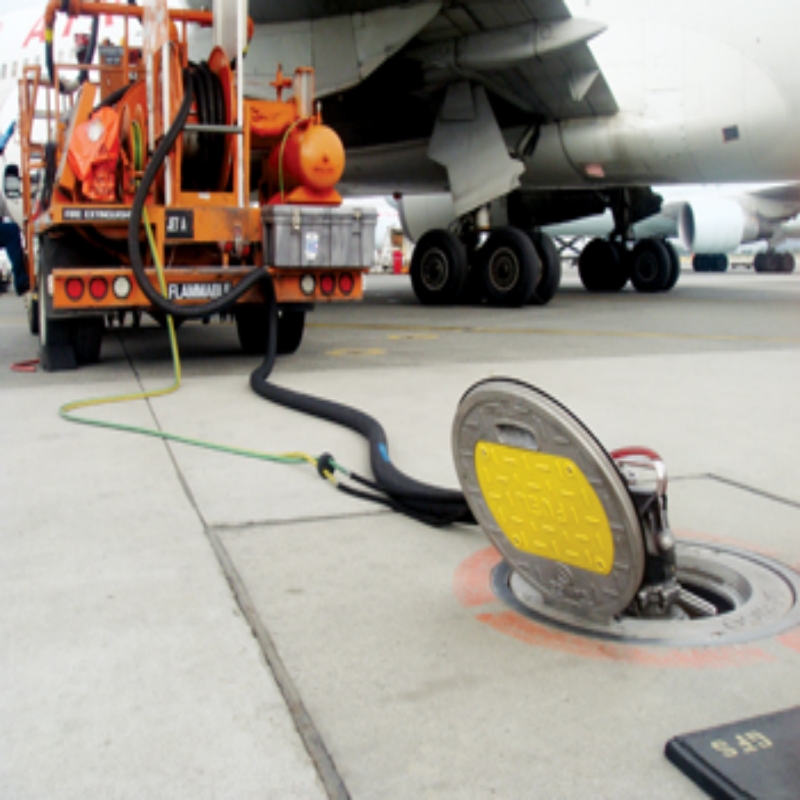
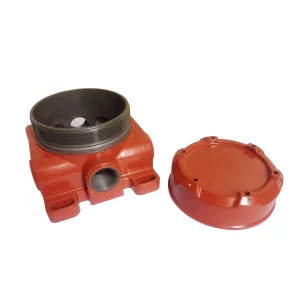
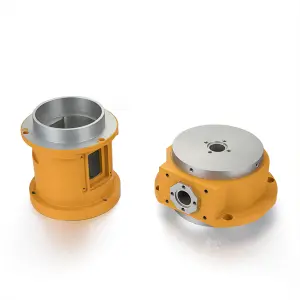
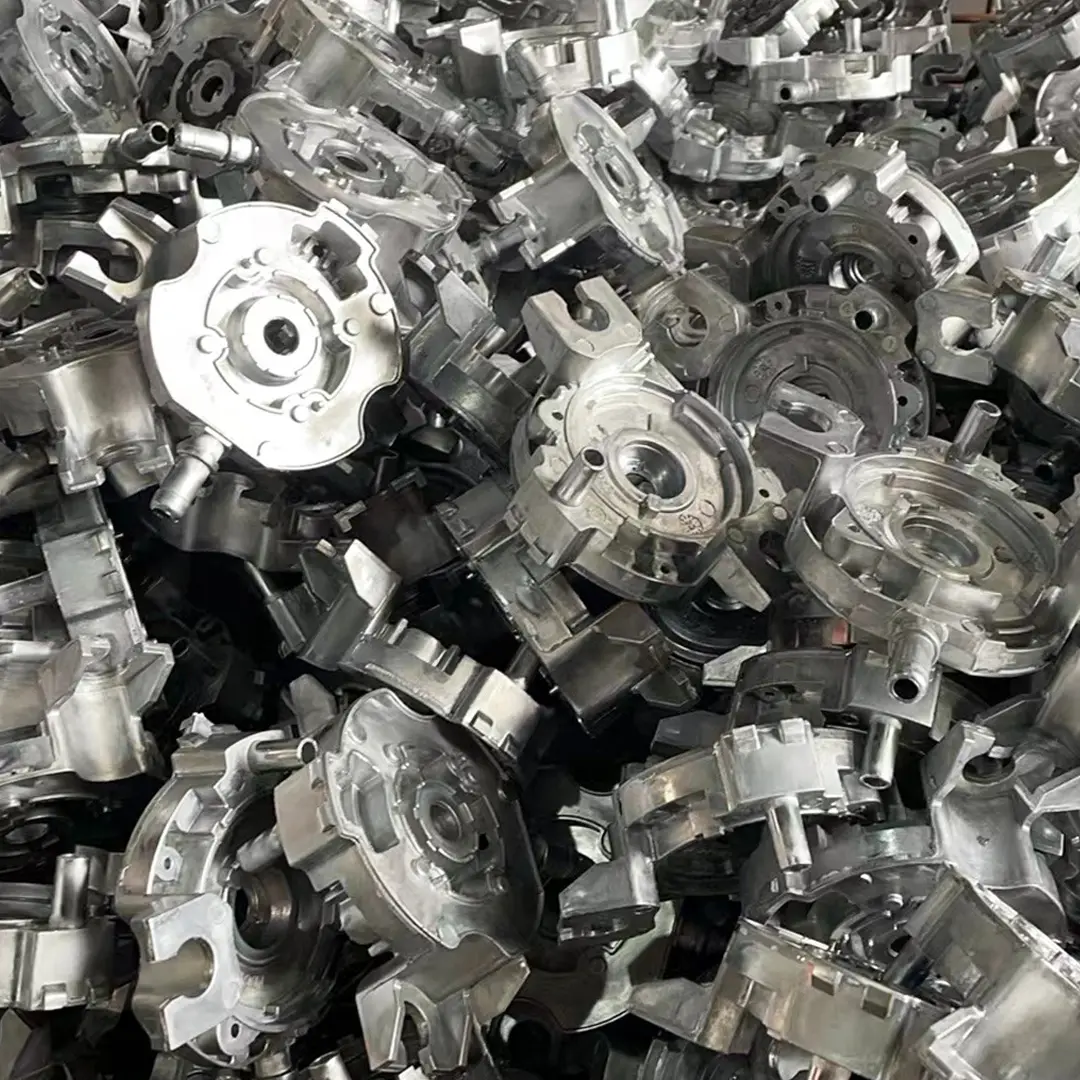
Aviation fuel hydrant pit boxes and hinge bracket sub-assemblies, providing robust weather resistance under harsh airfield conditions.
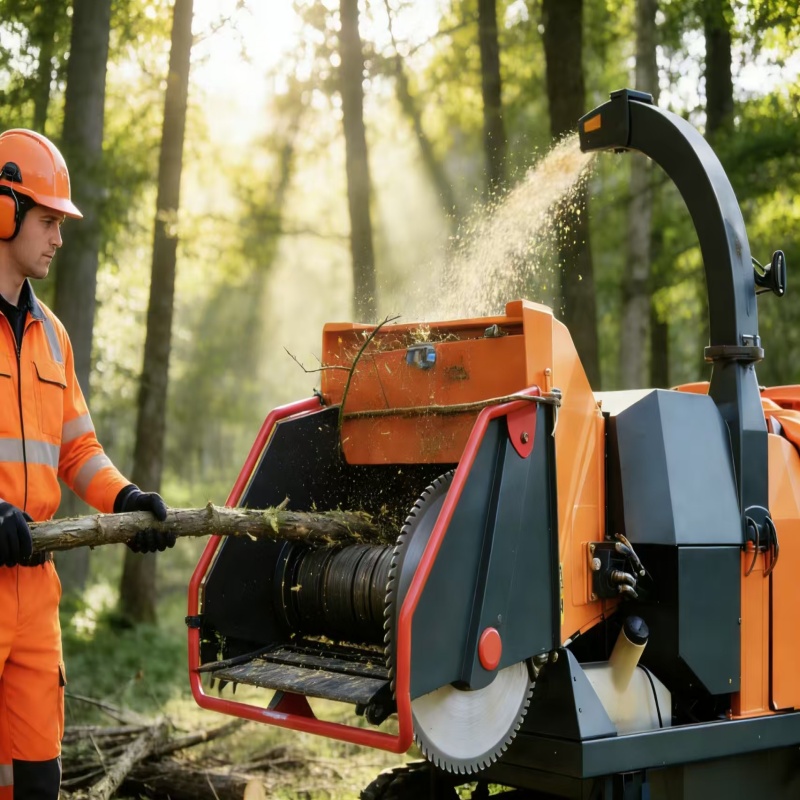
High-impact wood chipper cutter discs and feed rollers, manufactured from hardened Q345B, 42CrMo, and NM400 alloys.
Our pricing structure is determined by raw material costs, order volumes, post-processing options, and delivery schedules. Please contact our sales office with your drawings and specifications for a detailed quote.
Yes, we require minimum order quantities for international shipments to ensure production efficiency. For specialized prototyping or trial orders, please contact our team to discuss project-specific requirements.
Yes, we provide full quality documentation including Certificates of Analysis/Conformance (COA/COC), material test reports, dimensional inspection records, export declarations, and certificates of origin.
Samples are typically completed in about 7 days. For volume production, the standard lead time is 20 to 30 days after receipt of down payment and final drawing approvals. We work with clients to accommodate tight schedules whenever possible.
We accept wire transfer (T/T), L/C, Western Union, and PayPal. Our standard terms are a 30% deposit in advance, with the remaining 70% balance paid against the copy of the Bill of Lading (B/L).
We stand behind our materials and workmanship with a comprehensive warranty. It is our policy to work with customers to resolve any quality or tolerance concerns to our clients' satisfaction.
For standard decorative and light industrial applications (Type II), we maintain an anodizing layer thickness between 8 and 15 microns. For severe outdoor or marine environments, we can increase the thickness to 20-25 microns. Hardcoat anodizing (Type III) is also available, reaching thicknesses up to 50 microns for increased wear resistance.
Alloys with low trace elements, such as 6063 or 6061, yield a clean, transparent natural clear finish. High-silicon alloys (like cast 356 series) tend to turn dark grey during anodizing, while copper-heavy alloys (such as 2024 series) can take on a gold/yellow hue. Our engineering team can help select the correct alloy for your aesthetic and functional requirements.
 XinYe Metal