A Premier Owner-Managed OEM CNC Machining & Metal Fabrication Manufacturing Facility Serving Global Supply Chains
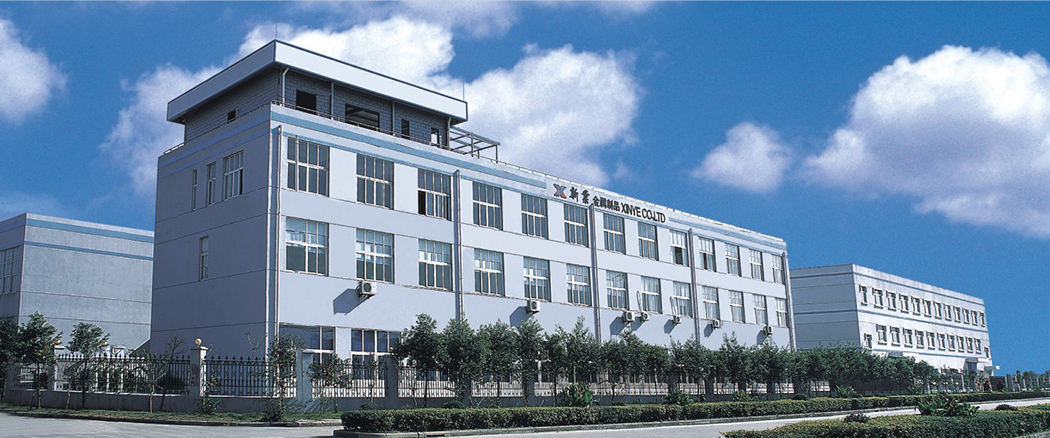
Ningbo Jiangbei XinYe Metal Works Co., Ltd. was established in 1996 as a family-owned business and has evolved into an owner-managed SME benchmark corporation. Situated in the Ningbo Jiangbei Industrial Zone, our facility is strategically positioned within a 3-hour high-speed rail transit window from Shanghai International Airport, directly connected to the world’s largest deep-water shipping hub (Ningbo-Zhoushan Port).
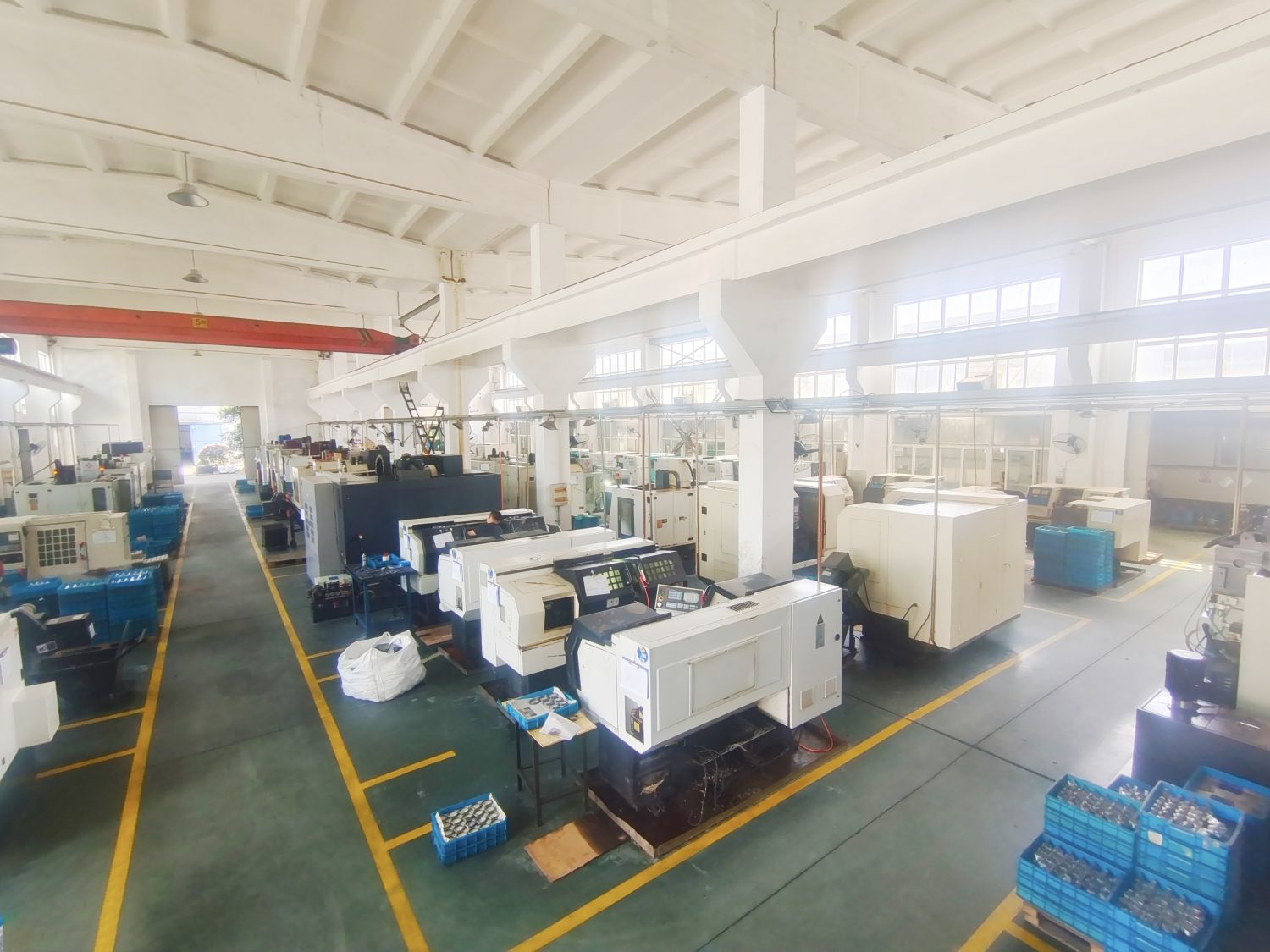
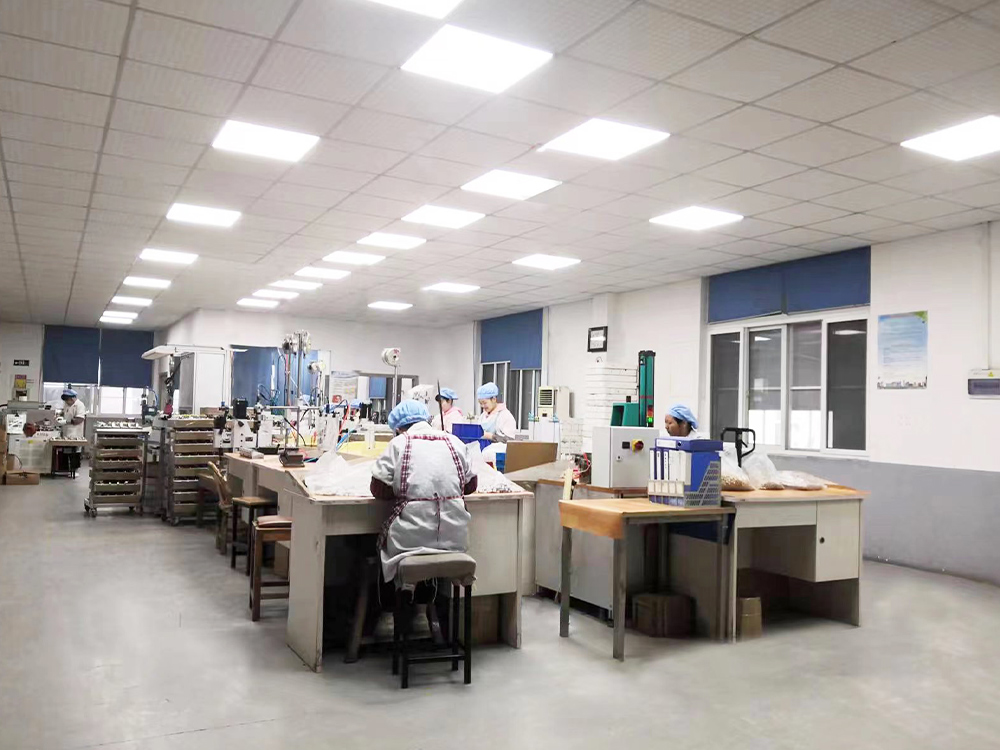
Spanning a total physical area of 16,000 square meters of high-capacity production floor and backed by an additional 11,000 square meters of specialized construction area, XINYE maintains an agile workforce of 130 professionals. This includes 80 highly skilled production technicians and 50 experts committed to product development, process engineering, quality assurance, metrology, and global client support.
XINYE provides end-to-end, multi-disciplinary metalworking competencies. We seamlessly bridge material conversion and sub-micron finishing across five primary technological domains:
Sub-Micron Machining Capabilities, Japanese Machine Tool Equipment, and Advanced Kinematics
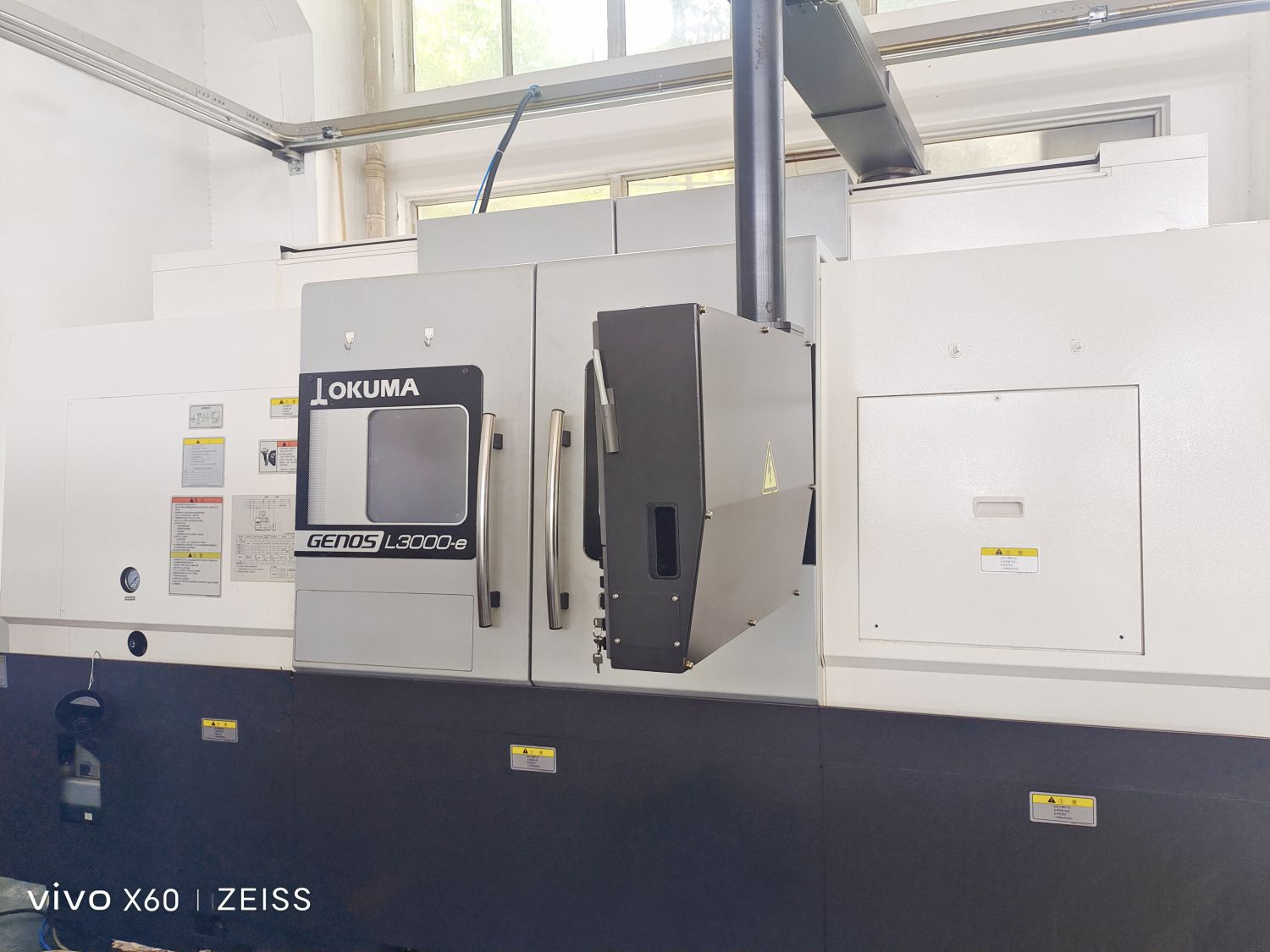
Our machine shop floor features imported high-speed CNC centers from Japan. Outfitted with high-rigidity spindles, active thermal compensation, and dynamic tool path control, our setup achieves repeatable dimensional tolerances down to ±0.001 mm.
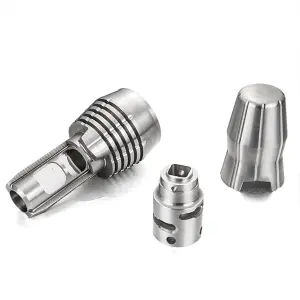
Our multi-axis machining centers feature 4th-axis rotary tables capable of index cutting and continuous interpolation. This setup reduces setup changes, eliminates cumulative datum stack errors, and delivers complex geometric profiles for aerospace and automotive parts.
XINYE operates on a baseline schedule of 6 days per week, 16 hours per day. For high-volume production spikes, our infrastructure scales up to full 24/7 round-the-clock continuous production within 30 days, supported by available expansion land.
| Machining Parameter | Technical Capability & Specification | Engineering Value Delivered |
|---|---|---|
| Machining Accuracy | Positioning accuracy: ±0.003mm | Repeatability: ±0.001mm | Ensures high interchangeability for strict OEM assemblies. |
| Spindle Performance | 12,000 - 20,000 RPM high-speed direct-drive spindles | Delivers mirror-like surface finishes without secondary polishing. |
| Raw Material Versatility | Aluminum Alloys (6061-T6, 7075, 2024), Stainless Steel (304, 316L, 17-4PH), Tool Steels, Brass, Copper & Engineering Plastics | Wide metallurgical adaptability suited for diverse industrial requirements. |
| Surface Roughness (Ra) | Down to Ra 0.4 µm (16 µin) via precision CNC finishing | Reduces friction and mechanical wear on moving powertrain components. |
| Part Dimension Envelope | Micro-machining up to large-scale structural parts (X: 1000mm × Y: 600mm × Z: 500mm) | Covers everything from small sensor housings to heavy industrial frames. |
Combining Casting, Forging, Stamping, and Machining Under One Qualified Engineering Roof
Utilizing high-capacity friction press machinery (300 to 1,000 tons press force) and column hydraulic presses (100 to 630 tons), XINYE produces high-density aluminum forgings with zero internal porosity, refined grain flow, and superior fatigue resistance.
Our Silica-Sol lost wax casting setup turns stainless steel and high-temperature alloys into complex, thin-walled components with excellent dimensional consistency, minimizing material waste and subsequent machining time.
Equipped with punching press lines ranging from 5 tons to 250 tons, we handle precision sheet metal stamping, deep-drawn enclosures, and copper/alloy brackets with high repeatability.
We provide full-spectrum surface treatments including Type II/III Hard Anodizing, Electro-polishing (E-polish) for stainless steel, chemical passivation, and protective powder coatings for corrosion resistance in harsh operational settings.
Beyond raw machining, XINYE offers dedicated sub-assembly workshops. We perform hardware installation, helicoil inserting, O-ring fitting, pressure testing, and custom protective packaging to deliver ready-to-use assemblies.
Our team of 50 R&D, engineering, and quality specialists collaborates directly with your CAD designers to perform Design for Manufacturability (DFM) reviews, optimizing tool paths, reducing setups, and lowering total unit cost.
Combining Advanced Automation, Regional Ecosystem Synergy, and Agile Operations for Global OEM Enterprise Buyers
Location plays a critical role in global procurement risk management. Situated in the Ningbo Jiangbei Industrial Zone, XINYE operates adjacent to the Ningbo-Zhoushan Port—the world’s busiest port by cargo tonnage. This location minimizes inland transit timelines and shipping costs. Furthermore, our facility is accessible within 3 hours from Shanghai Pudong International Airport via China's high-speed rail network, facilitating on-site vendor audits and fast engineering sign-offs for international clients.
Within a 50-kilometer radius of our factory lies a complete industrial ecosystem of certified raw material suppliers, alloy foundries, heat treatment specialists, and custom tooling shops. This regional proximity eliminates production bottlenecks, reduces raw material lead times, and cushions against global supply chain disruptions.
In volatile global markets, procurement leaders require manufacturing partners with flexible throughput capabilities. XINYE’s baseline operation runs on a 6-day, 16-hour dual-shift schedule. When emergency surge demand arises, our management framework can scale up to a full 24/7 operating model within 30 days. Backed by an additional 11,000 square meters of set-aside construction land, we can rapidly deploy custom tooling setups and dedicated CNC machine cells to support customer expansions.
Custom OEM Component Engineering for Critical Industrial Sectors across Europe, North America, and Asia
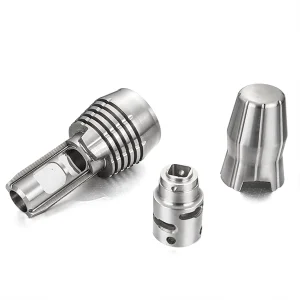
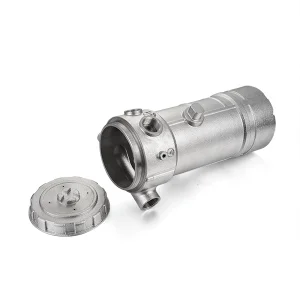
High-integrity components including Aviation Fuel Hydrant Pit Box Enclosures, Hinge Brackets, Turbine Inlets, and Transmission Housing Assemblies machined from high-strength forged aluminum and stainless steel alloys.
Precision EV transmission components, structural chassis connectors, E-bike frame tubes, hydraulic brake levers, and high-duty forged engine brackets engineered to withstand rigorous vibration and stress fatigue.
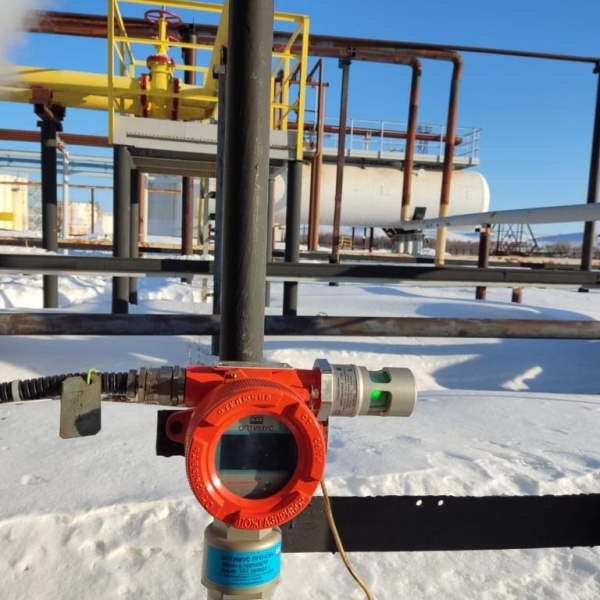
Explosion-proof enclosures, toxic gas sensors, flame detector housings, and high-pressure fire safety valve components crafted for oil rigs, refineries, and hazardous mining sites.
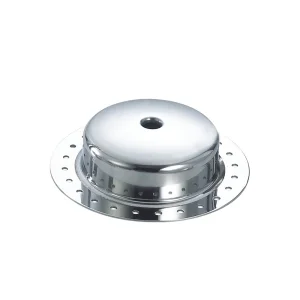
Sanitary food-grade components including stainless steel cream whippers, tabletop cooking stove manifolds, and processing pumps requiring smooth surface finishes (Ra < 0.8 µm) and electro-polished passivated layers.
Heavy-duty forged aluminum bracket with post-CNC 4-axis milling. Material: Al 6061-T6.
View Solution
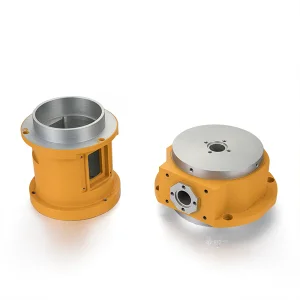
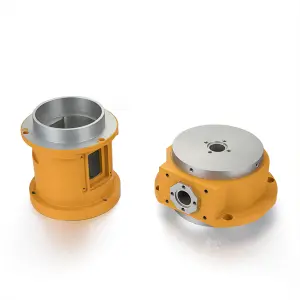
Precision machined transmission housings with tight concentricity tolerances within ±0.005mm.
View Solution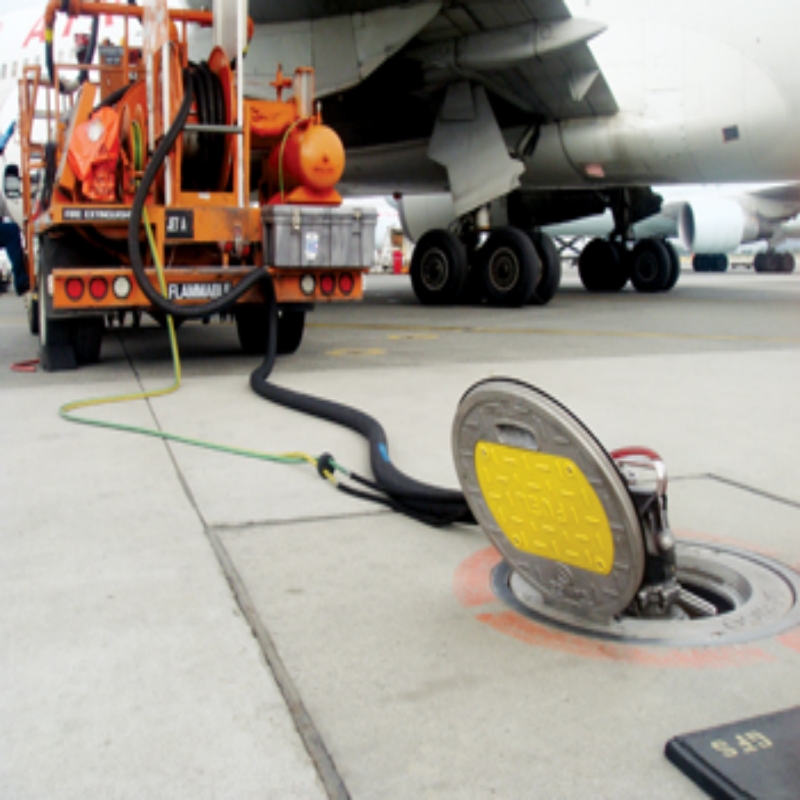
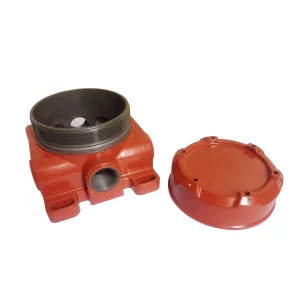
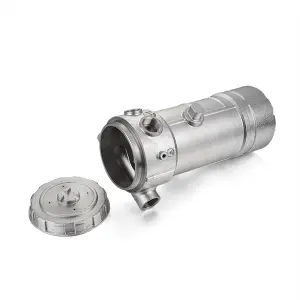
Aviation fuel hydrant pit box, hinge brackets, turbine inlet housings designed for high-stress endurance.
View Solution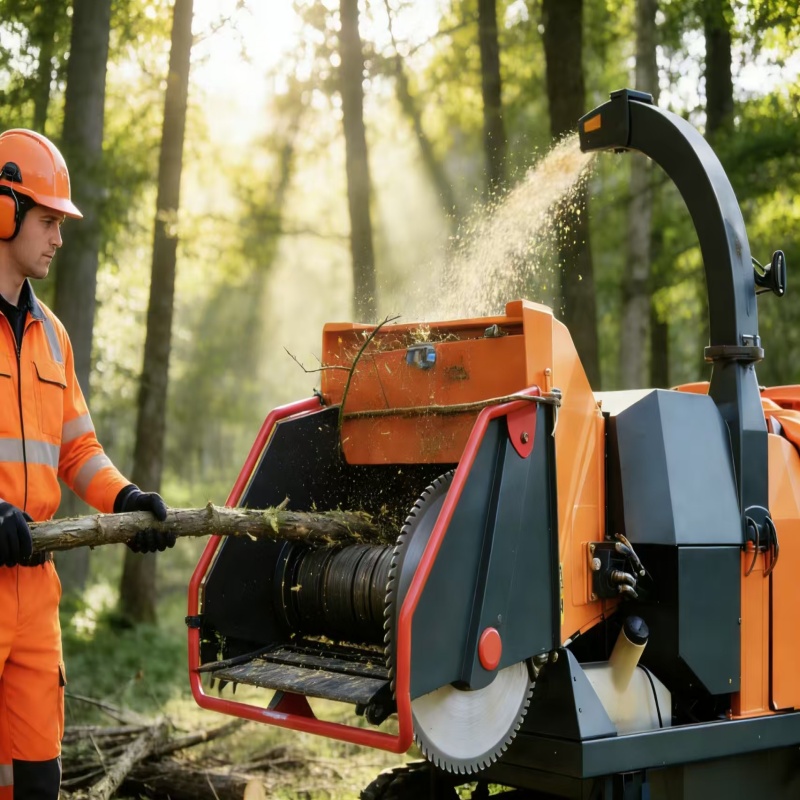
Precision wood chipper crushing components using alloy steels Q345B, 42CrMo, and NM400 shafts.
View SolutionStrategic Transition Toward AI-Driven Adaptive Machining, Smart Automation, and Hybrid Manufacturing
Integrating real-time sensor feedback and AI algorithms into CNC controller loops. Micro-vibration and power draw are monitored during cutting to continuously adapt spindle speeds and feed rates, extending tool life by 30% and eliminating chatter marks.
Combining metal 3D printing (Direct Energy Deposition) with post-process 5-axis CNC machining. Complex internal cooling channels are built additively and subsequently milled to sub-micron surface finishes within a single continuous operation.
Deploying IoT connectivity across every CNC machining cell. Critical operational variables—spindle temperature, thermal displacement, coolant pH, and tool wear—are digitized to create a full digital twin record for complete lot traceability.
Certified Under ISO 9001:2015 & SA8000 Social Accountability Standards with Traceable Inspection Reports
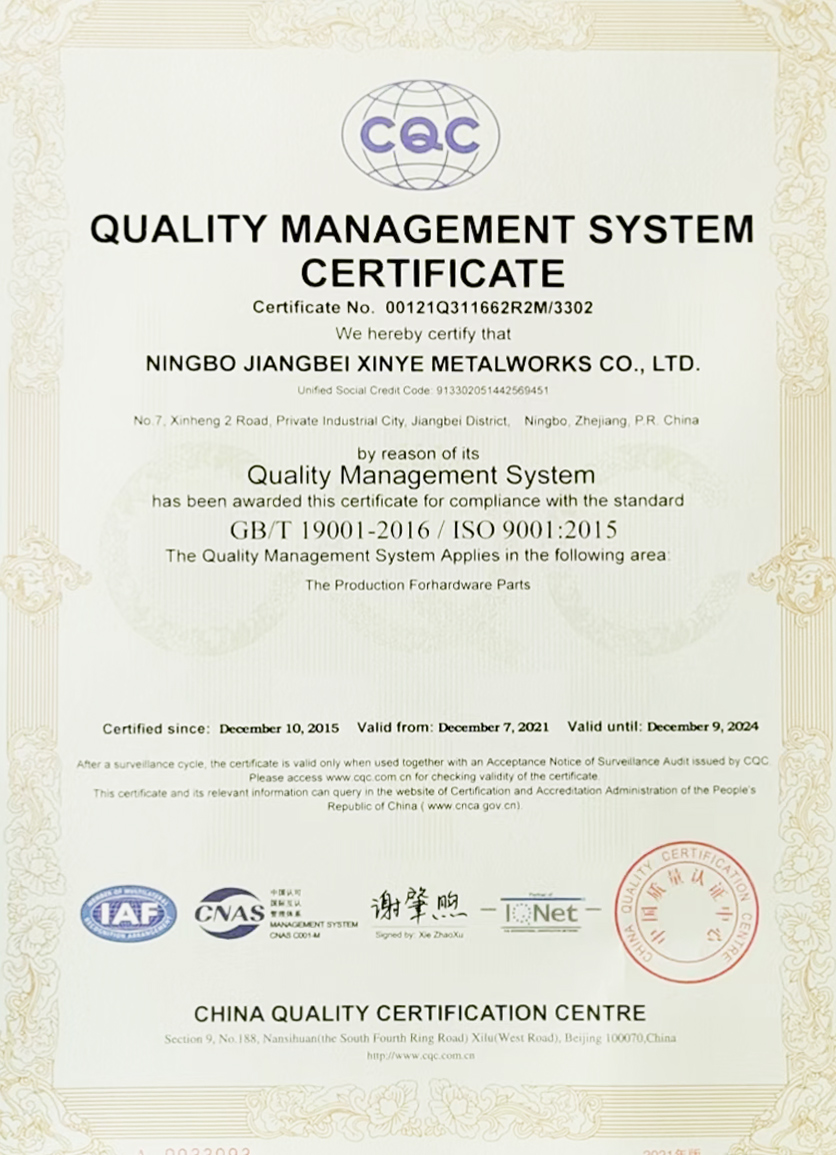
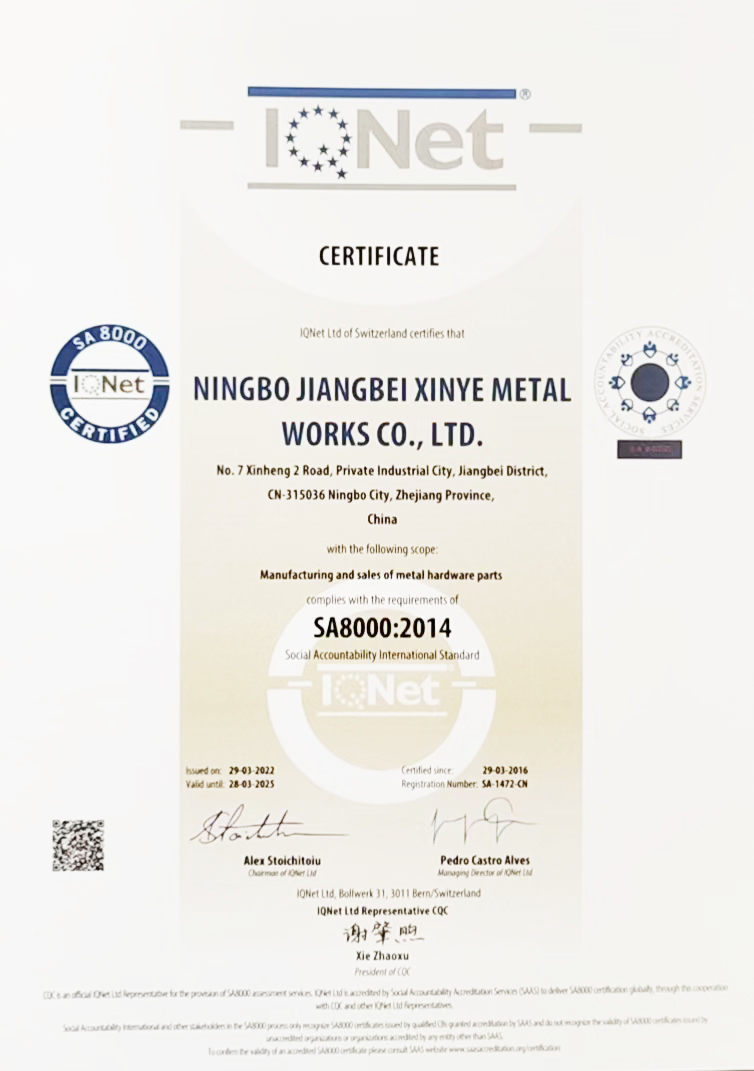
At XINYE, quality control is woven into every stage of production—from raw material receiving to final boxed delivery. We maintain a completely transparent, batch-traceable quality management system backed by dual certifications: ISO 9001:2015 for quality system execution and SA8000 for social accountability and ethical working standards.
Every job order includes detailed quality reporting packages: Material Mill Test Certificates (EN 10204 3.1), CMM Full Dimensional Inspection Records, Surface Roughness Profiles, and Certificate of Conformance (CoC).
"Quality is our foundation. With customer input, we have built a fully traceable quality framework where every single production process is verified, recorded, and archived for total product reliability."
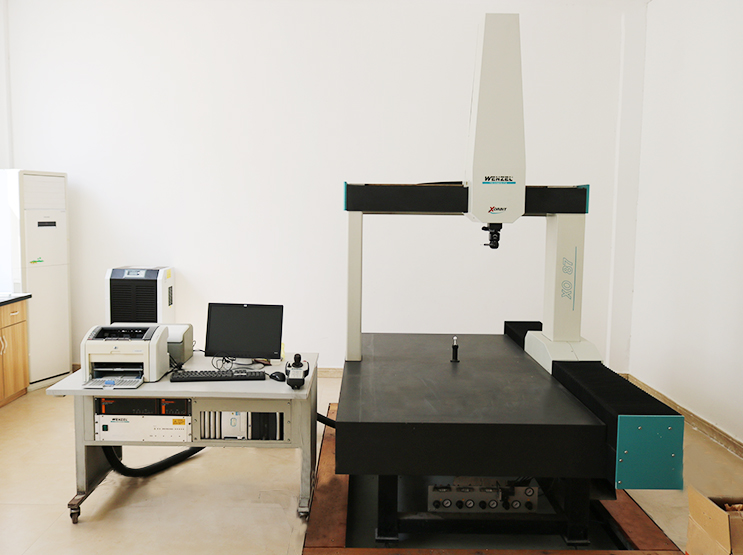
Precision 3D Coordinate Measuring Machine for GD&T verification down to 0.001mm.
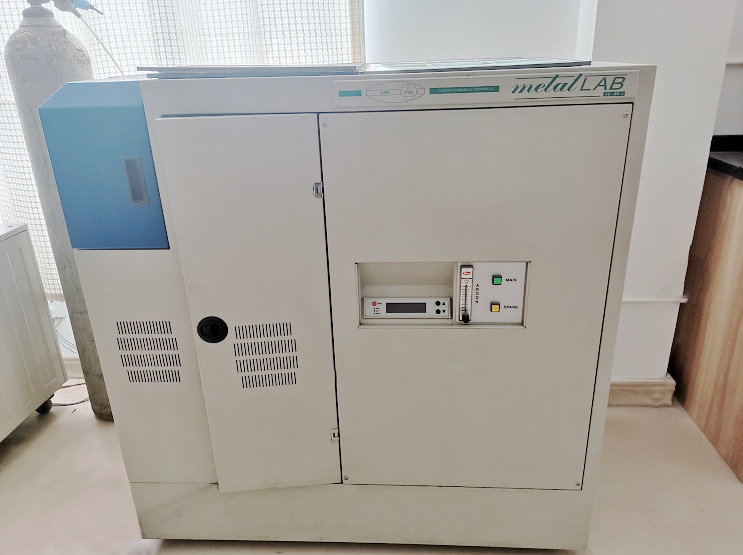
Optical emission spectrometry for exact chemical alloy composition verification.
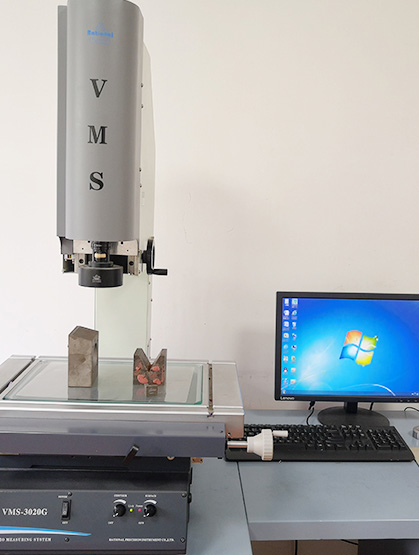
High-magnification non-contact optical inspection for small geometric features.
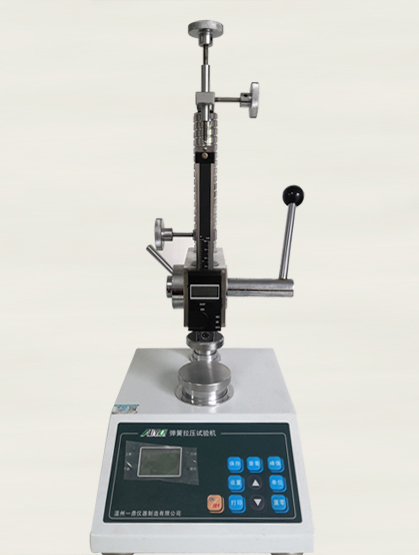
Mechanical force load testing for spring tension, compression, and material yield strength.
A Structured Framework for Procurement Managers and Engineering Leaders to Optimize TCO
A Transparent 5-Stage Engineering Lifecycle Ensuring Quality, Precision, and On-Time Delivery
Receive 2D/3D CAD models (STEP/IGES/PDF), verify GD&T requirements, run DFM assessment, and issue detailed cost breakdown.
Procure certified materials, execute CAM programming, machine prototype samples, and perform 100% CMM dimensional checks.
Deliver physical prototypes alongside full CMM inspection reports, material certifications, and surface roughness profiles for client sign-off.
Deploy multi-axis CNC machines and automated forging lines. In-process inspection checkpoints ensure high repeatability across batch runs.
Apply corrosion-inhibiting packaging, shock-resistant casing, export-ready palletization, and manage sea/air customs dispatch.
In-Depth Engineering & Procurement Insights for OEM Component Buyers
 XinYe Metal