7 Best Precitech Forging Manufacturers for Global Buyers

Time:2026-09-16 Author:Sophia
0%

The global forging market is becoming more demanding, not merely larger. Buyers now expect tighter tolerances, repeatable mechanical properties, and dependable delivery across borders. Precitech Forging manufacturers must therefore prove more than production capacity. They need controlled tooling, documented heat treatment, inspection discipline, and traceable materials.

Industry data explains this pressure. The World Steel Association reported approximately 1.88 billion tonnes of crude steel production worldwide in 2024, showing the scale of the industrial supply base. However, precision components require far greater control than ordinary steel output. The International Energy Agency’s Global EV Outlook 2024 also recorded strong electric-vehicle growth, increasing demand for lightweight, high-strength drivetrain and suspension parts. These trends affect forging suppliers directly. Tolerances become narrower. Development cycles become shorter.

This guide reviews seven manufacturers that may interest global buyers seeking Precitech Forging capabilities. The assessment considers closed-die and near-net-shape processes, alloy experience, CNC finishing, testing systems, certifications, export performance, and communication quality. A factory tour still matters. A polished website does not replace a dimensional report or a material certificate.

Some rankings remain subjective. Public supplier data is often incomplete. That limitation deserves attention. Buyers should verify current equipment, annual capacity, audit records, and subcontracted operations before signing contracts. The selected manufacturers represent credible options, not automatic guarantees. Real performance depends on part geometry, order volume, quality expectations, and regional logistics. Small details matter. A stable die temperature, a clean batch record, or a delayed inspection can change the final result.
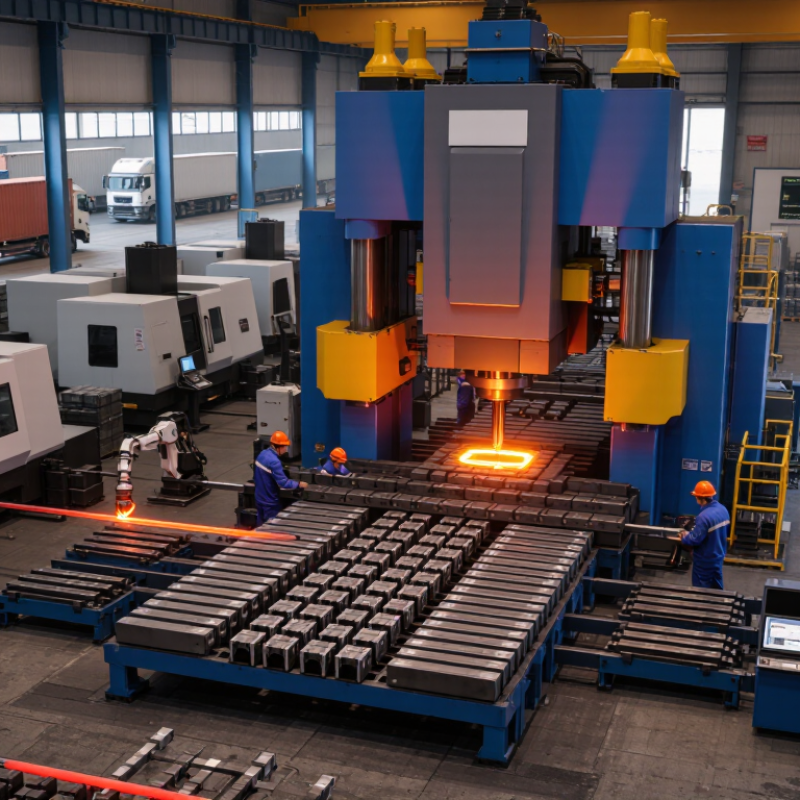
7 Best Precitech Forging Manufacturers for Global Buyers

What Precitech Forging Means for Global Industrial Buyers

The term Precitech forging usually describes precision forging, where heated metal is shaped near its final dimensions. Global industrial buyers value this process because it reduces machining waste and improves repeatability. It can support gears, flanges, shafts, and load-bearing components. However, “precision” is not a universal quality grade. Buyers should confirm tolerances, alloy control, grain flow, and heat-treatment records before comparing seven potential manufacturers.

The best manufacturers usually show stable results across trial and production batches. They provide material certificates, dimensional reports, process drawings, and traceable batch numbers. Factory audits should examine die maintenance, furnace calibration, inspection equipment, and operator training. A supplier may produce an excellent sample but struggle with monthly volume. That gap matters. I have seen purchasing teams focus heavily on unit price, then face higher costs from rework, delayed inspection, and inconsistent hardness. Supplier communication also deserves attention. Clear engineering feedback often reveals more than a polished sales presentation.

Tips: Request three recent inspection reports, not one sample report. Ask how deviations are corrected and documented. Check whether tolerances match your machining allowance. Confirm packaging details for long-distance transport. Do not accept vague promises. A small pilot order may expose weaknesses early, although it can never replace a complete qualification review.

Key Criteria for Evaluating Precitech Forging Manufacturers

Key Criteria for Evaluating Precitech Forging Manufacturers

Choosing a precision forging manufacturer requires more than comparing prices. Review its experience with your alloy, component size, tolerances, and production volume. Ask for examples of similar parts, not only attractive catalog images. A capable team should explain die design, forging temperature, grain flow, and expected machining allowance in clear language. That conversation often reveals practical knowledge.

Quality evidence matters. Check material certificates, heat-treatment records, dimensional reports, and non-destructive testing procedures. Reliable manufacturers maintain traceability from incoming billet to final shipment. Their inspection equipment should be calibrated and suitable for tight tolerances. Certifications can support credibility, but they do not replace process evidence. A factory may hold impressive documents yet provide weak reports. Look deeper.

Production stability also deserves attention. Review capacity, maintenance routines, backup equipment, packaging methods, and realistic lead times. Request a sample inspection report before placing a large order. Speak with technical staff, not only sales representatives. Their answers should remain consistent across drawings, samples, and contracts. No manufacturer is flawless. I would rather see a supplier openly discuss a past defect than hide every problem. That honesty, supported by corrective-action records, offers stronger evidence of reliability than confident promises.

Profiles of Seven Leading Precitech Forging Manufacturers

Profiles of Seven Leading Precitech Forging Manufacturers

The global forging market is becoming more quality-driven. Grand View Research’s 2024 analysis projects steady growth through 2030, supported by automotive, aerospace, and energy demand. Seven manufacturer profiles reveal different strengths rather than one universal model.

One European producer focuses on closed-die forging for aircraft structures. Its strength is traceability, supported by digital heat records and ultrasonic inspection. A North American supplier serves heavy trucks with high-volume steel components. It reduces waste through near-net-shape forming. One East Asian manufacturer specializes in aluminum precision parts, using automated temperature control. Its cycle times are impressive, though energy reporting needs closer review. Another supplier produces titanium forgings for demanding aerospace applications. It emphasizes grain-flow control and destructive testing. That evidence matters.

A Central European company targets industrial valves and hydraulic systems. It combines forging with computer numerical control machining, reducing alignment errors. One Southeast Asian manufacturer offers cost-focused production for automotive suppliers. The International Energy Agency’s industry reports stress efficiency and emissions measurement, making its furnace data increasingly important. The seventh producer serves renewable-energy equipment, including large drivetrain parts. It uses advanced simulation before tooling, which can lower development risk.

Buyers should compare more than press capacity. ISO 9001 certification, process capability data, material certificates, and corrective-action records deserve equal attention. ASTM standards help, but supplier discipline still varies. Some published claims remain difficult to verify. Independent audits and sample trials are sensible safeguards.

Chart overview: This comparison highlights the key capability areas global buyers typically assess when evaluating leading precision forging manufacturers. The scores are normalized benchmark ratings from 1 to 10 and focus on process capability rather than company or brand names.

Comparing Capabilities, Quality Standards, and Production Capacity

Choosing among the best precision forging manufacturers requires more than comparing catalog photographs. Buyers should examine press capacity, alloy experience, tooling control, and production stability. A capable supplier can explain its forging range, from small stainless steel fittings to large structural components. It should also provide practical details about die life, material yield, and typical lead times.

Quality standards need evidence. ISO 9001 certification is useful, but it cannot replace process records and product testing. Ask for heat-lot traceability, dimensional inspection reports, hardness results, and non-destructive testing procedures. A modern facility may use coordinate measuring machines, automated temperature monitoring, and controlled heat treatment. These details reveal daily discipline. They also expose weak points.

Production capacity should be judged by repeatability, not maximum press tonnage alone. Review monthly output, available shifts, maintenance planning, and backup equipment. A supplier may quote impressive capacity while relying heavily on one aging machine. That creates risk during peak demand. Request sample schedules and confirm how urgent orders are handled. No manufacturer is flawless. Even strong facilities can miss a tolerance during tooling changes. Reliable partners admit this, investigate root causes, and document corrective action. Factory visits, technical meetings, and small pilot orders often reveal more than polished sales materials.

How Global Buyers Can Select the Right Forging Manufacturer

Choosing among the seven best precision forging manufacturers requires more than comparing quoted prices. Global buyers should examine proven production experience, material expertise, and export reliability. Ask for sample inspection reports, process flow charts, and records of corrective actions. These documents reveal how a manufacturer handles pressure, not just how it presents itself.

The right supplier should control die design, forging temperature, heat treatment, machining, and final inspection. Verify equipment capacity against your part’s size, alloy, tolerance, and annual volume. Request traceability from raw material certificates to shipment records. Independent audits and recognized quality certifications can support trust, but they should not replace factory visits or technical discussions. A polished certificate is not enough.

Tips: Compare at least three production samples. Check surface defects under clear lighting. Confirm inspection tools and calibration dates. Discuss packaging, lead times, and customs documents early. Ask how rejected parts are contained and reported. Small details matter. A supplier may offer an attractive price yet lack stable capacity during peak demand. I have seen buyers overlook communication delays, then face expensive redesigns. That mistake is avoidable, although no manufacturer is perfect. Choose the partner that explains risks clearly, shares measurable evidence, and improves when problems appear.

FAQS

What does precision forging mean for industrial buyers?

Heated metal is shaped close to its final dimensions. This can reduce machining waste and improve repeatability. “Precision” alone does not guarantee quality.

Which components can precision forging support?

Common examples include gears, flanges, shafts, and load-bearing parts. Suitability depends on alloy, size, tolerances, and production volume.

What documents should buyers request from a manufacturer?

Request material certificates, dimensional reports, process drawings, and heat-treatment records. Batch numbers should connect raw material with final shipment.

How can buyers evaluate actual production quality?

Ask for three recent inspection reports. Compare production samples, not only catalog images. Check surface defects under clear lighting.

What should a factory audit examine?

Review die maintenance, furnace calibration, inspection equipment, and operator training. Confirm calibration dates. Small details matter.

How can buyers check whether production capacity is realistic?

Compare equipment capacity with part size, alloy, tolerances, and annual volume. Ask about maintenance, backup equipment, and peak-demand planning. A good sample may not prove stable monthly output.

Why are corrective-action records important?

They show how the manufacturer handles rejected parts and recurring defects. Ask how deviations are contained, corrected, and documented. Honest evidence is stronger than confident promises.

What should buyers discuss before ordering?

Confirm machining allowance, packaging, lead times, inspection methods, and customs documents. Clear technical communication can prevent expensive redesigns. I may still miss something, so keep reviewing after approval.

Conclusion

This guide explains what Precitech Forging means for global industrial buyers and why it matters when sourcing dependable forged components. It outlines the main criteria for evaluating manufacturers, including material expertise, engineering capability, dimensional accuracy, production flexibility, quality management, testing procedures, delivery performance, and compliance with international standards. By understanding these factors, buyers can assess whether a supplier is equipped to meet demanding technical and commercial requirements.

The article also presents profiles of seven leading Precitech Forging manufacturers without focusing on brand names, comparing their capabilities, quality standards, manufacturing technologies, and production capacity. It concludes with a practical framework for selecting the right partner based on application complexity, order volume, required certifications, customization needs, budget, lead time, and long-term supply reliability. This approach helps global buyers reduce sourcing risks, improve product consistency, and build stronger, more efficient forging supply chains.


Sophia

Sophia

Sophia is a dedicated marketing professional with an exceptional depth of knowledge about her company's products and services. With a keen understanding of market trends and customer needs, she crafts insightful blog posts that not only inform but also engage readers, enriching the company’s online......